
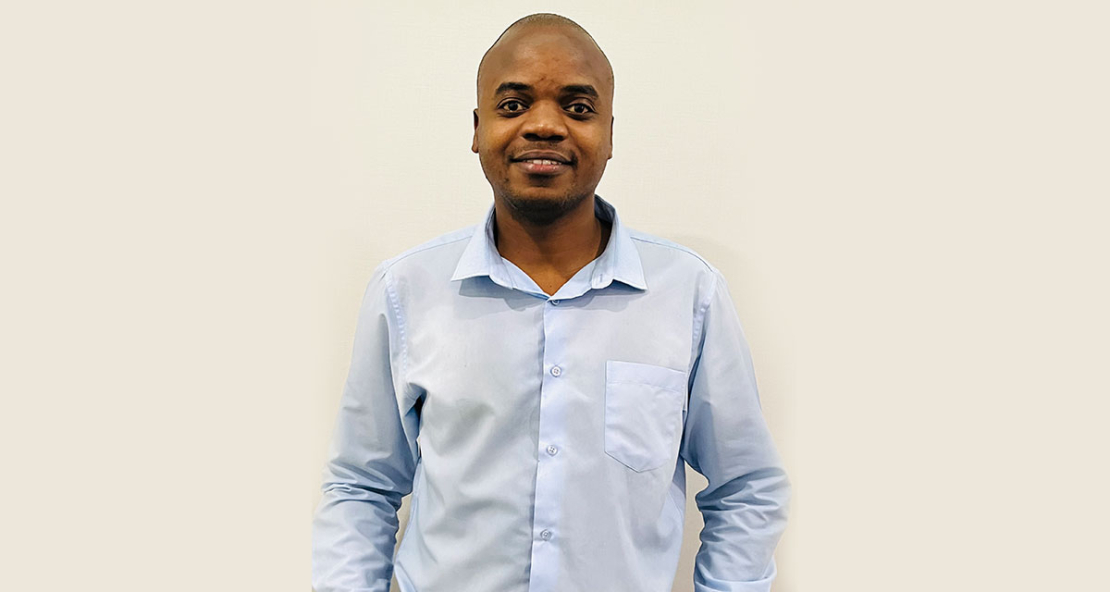
Jonathan Baloyi is a software engineer at DVT, an AI-driven and expert-led Dynamic Technologies group company. Using accessible AI, Jonathan built a prototype web-based tool that allows users to upload an image of a skin lesion and receive a risk-based prediction. It’s not a diagnostic tool and does not replace a medical professional’s assessment, but it brings early detection closer, encourages awareness and supports more informed healthcare decisions.
This was a personal project that Jonathan undertook in his own time out of a desire to create something useful. In many parts of South Africa, access to specialised healthcare is not always consistent. Early awareness can therefore play an important role in helping people recognise when to seek medical attention. Jonathan’s long-standing interest in artificial intelligence became the starting point for his personal project focused on skin cancer awareness.
His aim for the tool was to encourage earlier attention and prompt users to follow up with a qualified healthcare provider when something appears unusual. “The goal has never been to replace doctors or provide a final medical diagnosis but rather to serve as an educational and awareness tool that can guide users to seek professional medical attention when necessary.”
Growing up in Limpopo where summer temperatures regularly exceed 30oC, Baloyi became aware of the effects of prolonged sun exposure and the potential risks that come with it. This, combined with the reality that early screening is not equally accessible to everyone, led him to explore how a simple and accessible tool could help raise awareness and motivate action.
His prototype is shaped by careful boundaries. The first version of the tool was developed quickly but refining it took much longer. He focused on improving how the system presents results, how it handles user data and how clearly it communicates its limitations.
Results are presented as probability scores rather than fixed outcomes and clear disclaimers reinforce that the tool is not intended for clinical use. Users are consistently advised to consult a healthcare professional regardless of the prediction.
It is also intentionally simple. A user captures or uploads an image, which is processed and analysed before a result is returned. Behind the scenes, the image is sanitised, metadata is removed to protect privacy and it is converted into a format suitable for analysis by the model. Although the processing involves complex computation, the interface is designed to keep the interaction straightforward. Making it easy to use encourages people to take that vital first step.
Jonathan acknowledges that his tool still needs a lot of refinement, particularly through validation and verification by medical professionals. “Public datasets commonly used to train such models are often captured in controlled environments and tend to underrepresent the full diversity of skin tones,” he explains. “This tool is an awareness and screening aid, not a clinically validated system. Its outputs are intended to guide attention, not provide certainty. Performance across South Africa’s full skin-tone diversity is promising but still requires further validation, better local datasets and clinical collaboration.”
Looking ahead, moving beyond a prototype will require clinical partnerships, validation studies and regulatory approval to ensure safety, accuracy and fairness across different use cases and populations. So, for now, his work remains focused on demonstrating what is possible with accessible tools and thoughtful design.
Jonathan has demonstrated how software engineers can contribute to public health in practical ways. Even without full clinical integration, tools like this can help improve awareness and make initial information more accessible.
The project points to the potential of combining technical curiosity with real-world needs and it stands as an example of how careful design and clear purpose can turn a technical experiment into something that encourages meaningful action. With the right validation and partnerships, similar tools could form part of a broader effort to extend healthcare awareness and accessibility.
The prototype is publicly accessible and can be explored here: https://jbskincancerapp.co.za/home